
Software for computer and laptop repair shops
A bench job that takes three days is a different shape from a screen swap that takes an hour. Quotes before work, parts on order, machines by serial: the ticket is built for it.
One laptop, Monday to Thursday
Monday morning a laptop comes in that will not power on. It is booked in by make, model and serial number, with the processor, memory and storage recorded on the ticket so the machine that leaves is provably the machine that arrived.
After an hour of diagnosis the fault is a failed board component. A quote goes to the customer before any part is ordered, and nothing on the ticket moves until they approve it. If they come back asking for a cheaper option, the quote is revised rather than retyped.
The part is not on the shelf, so the ticket sits in Awaiting Parts while a purchase order goes out. That is a normal state, with its own date, not a job someone has to remember. Thursday the part arrives, is booked in against the order, the repair is finished and the balance settles at collection.
The modules that made it happen
RepairsInventory & device unitsPurchase orders & receivingInvoicing & paymentsCustomersReports & taxWorkforce
A longer job, held on one record
The states a bench job actually passes through, each one visible on the ticket and in the queue.
- 01Booked inMake, model, serial and the fault described.
- 02DiagnosedFindings on the ticket, in the technician's words.
- 03Quote sentPriced before the work, approved before the part.
- 04Awaiting partsA status with a date, tied to the purchase order.
- 05RepairedParts used come off stock and onto the job.
- 06CollectedBalance settled against any deposit already taken.
A job sent out to a specialist (a board-level repair, a data recovery lab) is marked Outsourced and stays on the queue, so it is still your ticket and still your customer while it is away.
Three things you can inspect
Real screens from the product, whose figures check against each other.

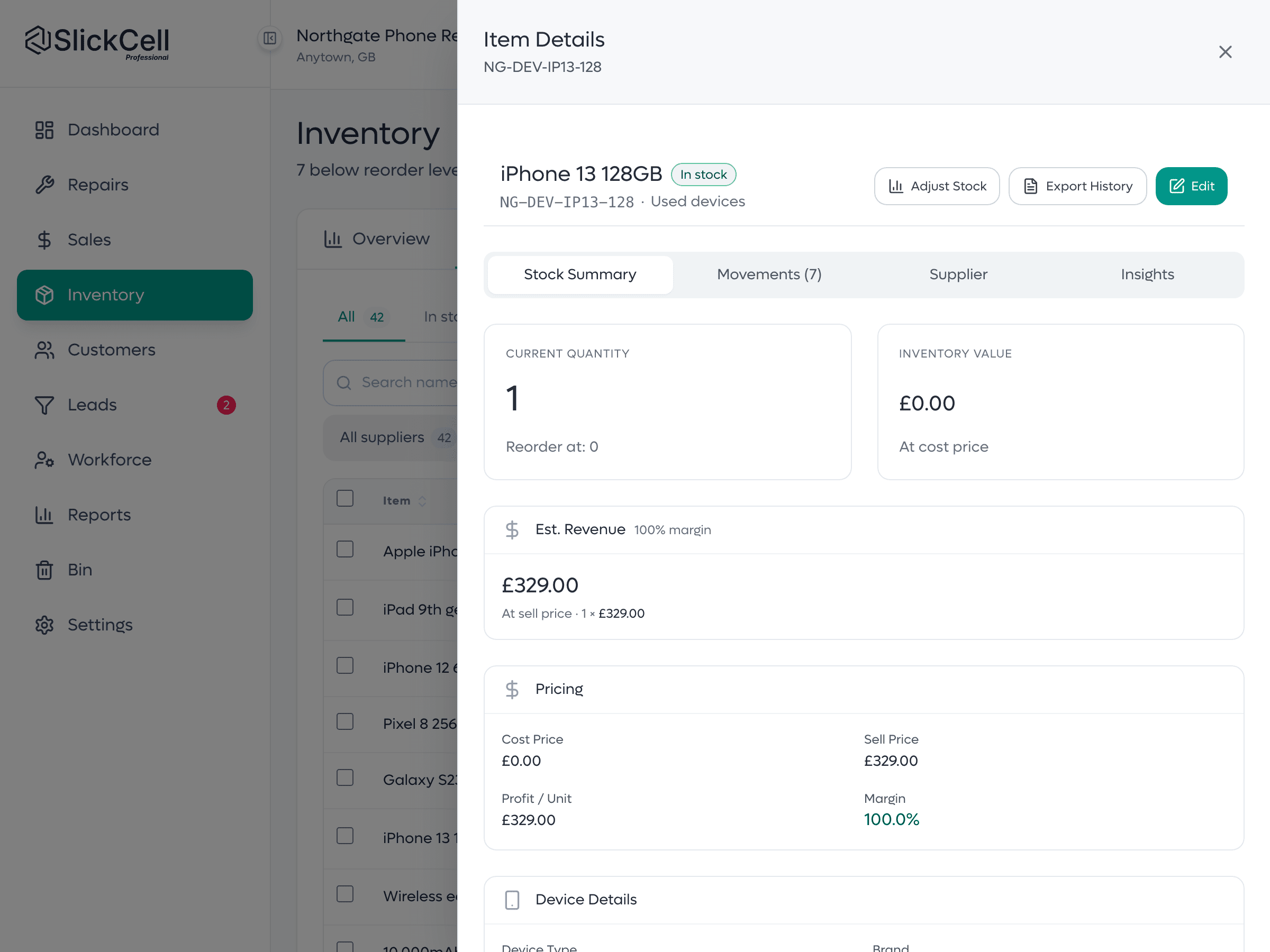
A device unit's history
One machine by serial: what it cost, what it sold for, its condition, and the stock ledger that recorded it arriving and leaving. The same record shape holds a refurbished laptop as holds a handset.
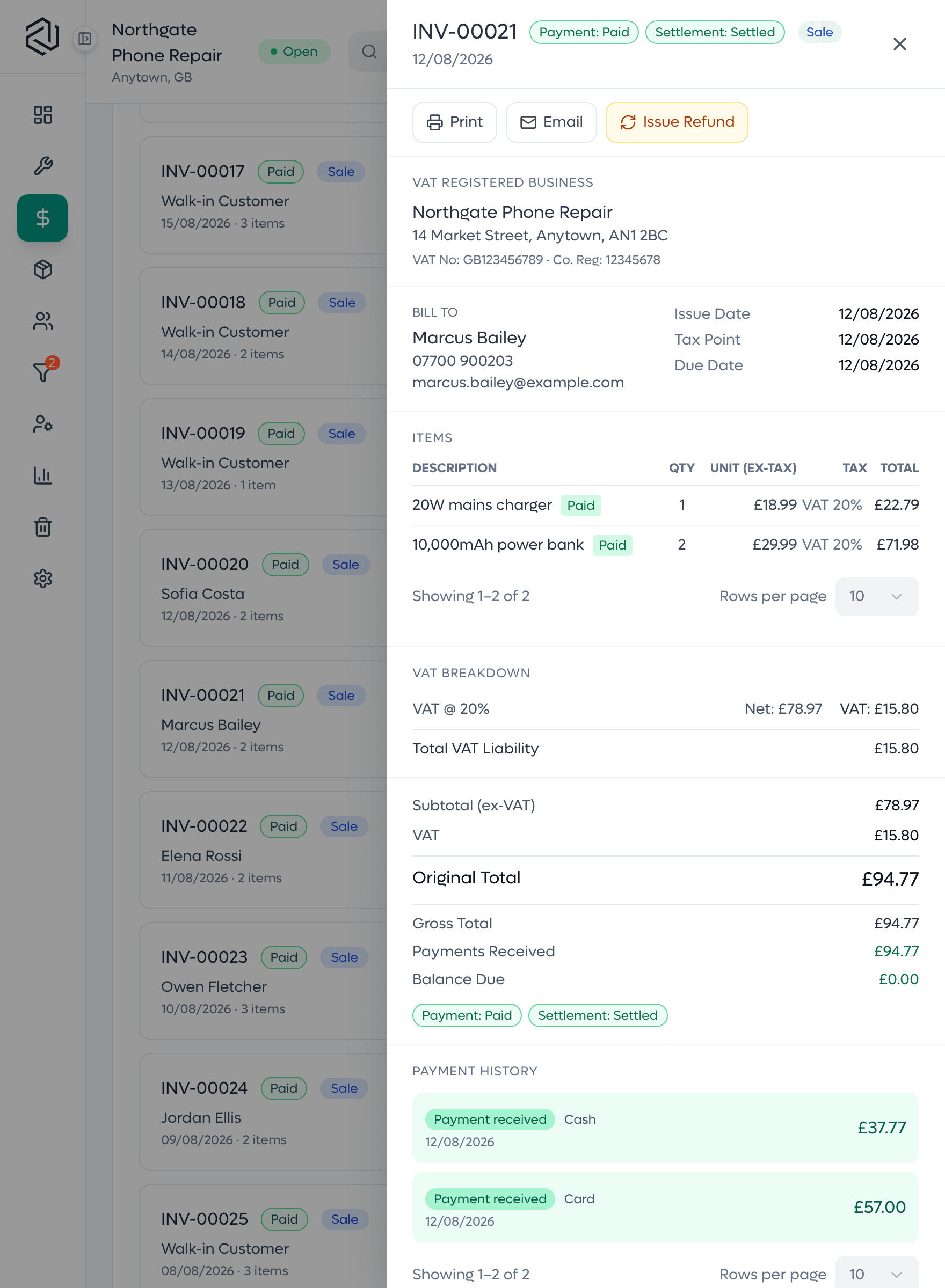
A split-payment receipt
One bill settled across card and cash, with the deposit taken at booking already counted. The tenders add up to the total and the balance lands on zero.
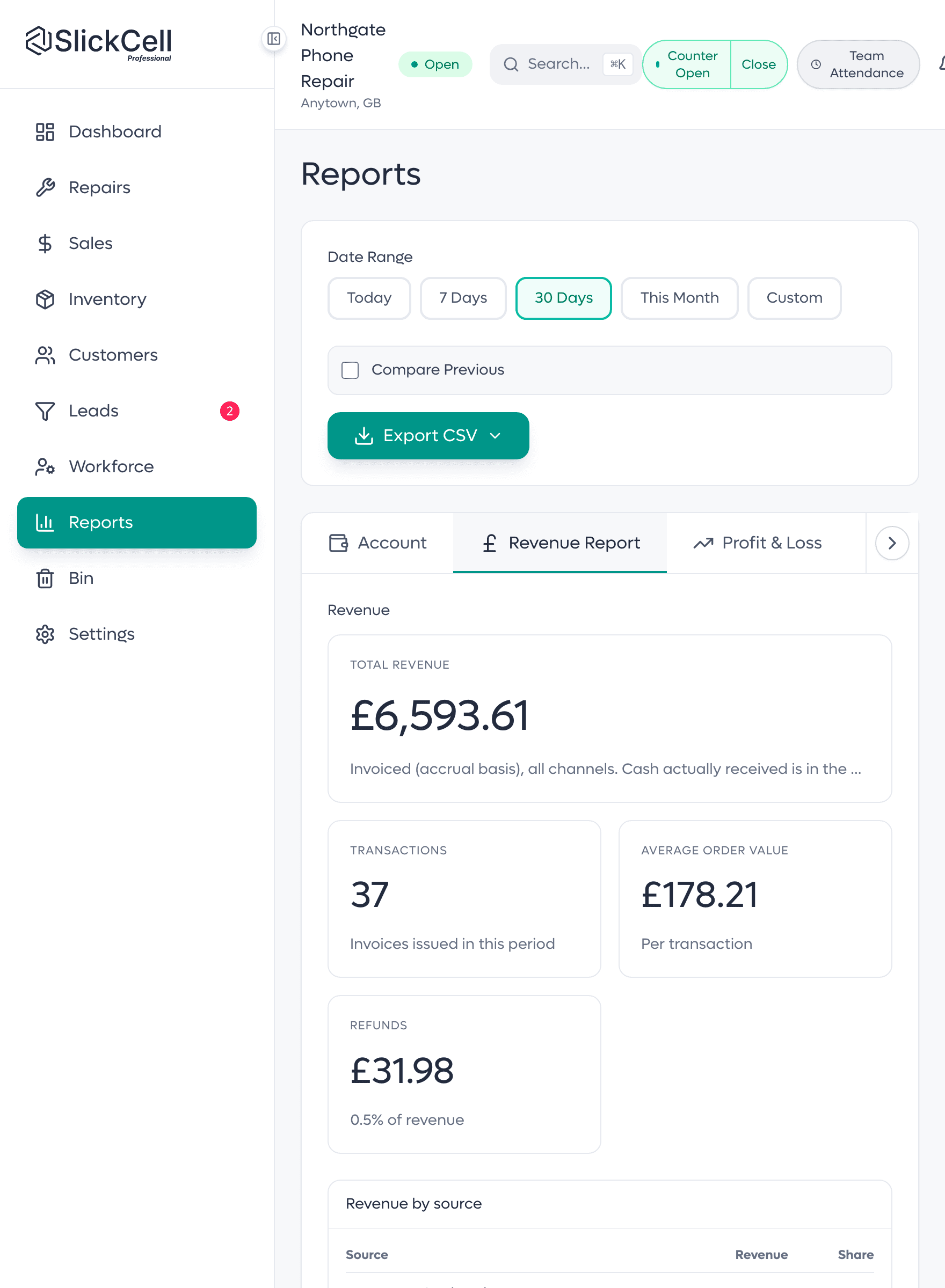
A report total, and its source
The revenue figure and the invoices it is made of, on the same screen. A report is the same number as the invoices, traced, not a separate number typed in.
Quotes that are agreed, parts that are tracked, machines that are yours
What a computer shop owner notices after the first month.
- No surprise at collection
- The quote the customer approved is on the ticket, and the bill is built from it.
- Parts on order are visible
- Awaiting Parts is a status with a date and a purchase order behind it, not a note.
- Serials that match
- The machine is booked in by serial, so the one that leaves is the one that arrived.
- Refurbished stock costed
- A machine you rebuild to sell is its own unit with its own cost and price.
- A month you can close
- Figures open onto the records behind them, so month-end is checking rather than rebuilding.
Built for the bench as much as the counter
Repairs
One ticket per job, from booked in to collected, with diagnosis and quote on it.
Awaiting parts
A real status with a date, tied to the order that will clear it.
Laptops by serial
Processor, memory, storage and screen on the record, brand list built in.
Desktops and all-in-ones
Tower or all-in-one, with graphics and form factor recorded.
Consoles too
Storage, edition and controllers included, on the same ticket shape.
Parts by quantity
Memory, drives and cables counted; machines tracked one by one.
A till for the counter
Repairs, accessories and refurbished machines on one sale, split tender.
Deposits and balances
Money taken at booking counts against the bill at collection.
Customer updates
Tell a customer the quote is ready or the job is done, and keep the record.
Reports & tax
Figures that open onto the records that produced them.
Stocktake
Count against a snapshot; stock moves only once approved.
More than one branch
One login across shops, with stock and staff kept per branch.
What computer shop owners ask
The questions shops ask before they switch, answered straight.
It was built for mobile phone repair shops first, and it says so on the page for them. Laptops, desktops, all-in-ones, tablets and games consoles are device types in their own right, each with a brand list and the spec fields that matter for it, and a bench job with a quote and a wait for parts is a normal ticket rather than an exception.
Yes. A ticket can carry a quote that is sent to the customer and sits at Quote Sent until they approve it. If they ask for a different option the quote is revised on the same ticket. Nothing is ordered and no part comes off stock until the approved version is converted into the job.
Awaiting Parts is a status of its own, with the date the job entered it, so the queue shows what is waiting and for how long. The purchase order for the part is raised in the same system, and when it arrives it is booked in against that order and the job can move on.
Machines you stock to sell, yes: each is its own unit with its own serial, cost, condition and price, and quantity is derived from those units. The serial is free text, so a laptop service tag, a console serial or your own shop reference all work. Parts and accessories are counted by quantity.
Mark it Outsourced. The ticket stays on your queue and the customer stays yours, so when the machine comes back the job carries on from where it was rather than being booked in again. The status is visible in the queue the whole time it is away, with the rest of the job's history intact.
Yes. A machine you rebuild is its own unit with its own cost, so when it sells the margin is real rather than estimated. If it was bought second-hand, cost and selling price are held per unit and margin-scheme tax is reported separately from standard tax. That is general information rather than tax advice.
The ticket stays open with its balance visible, so the shortfall is never converted into a discount by accident. You can see what is owed, message the customer from the record, and settle it later against the same job when they do turn up.
Yes, from one login, with stock and staff kept per branch and reporting available per branch or across the group. Multiple locations start on the Professional plan; additional branches are priced per month.

Bring us a bench job
A machine that needed a quote, waited on a part and came back from a specialist. We will run it end to end on your own workflow.